

Description
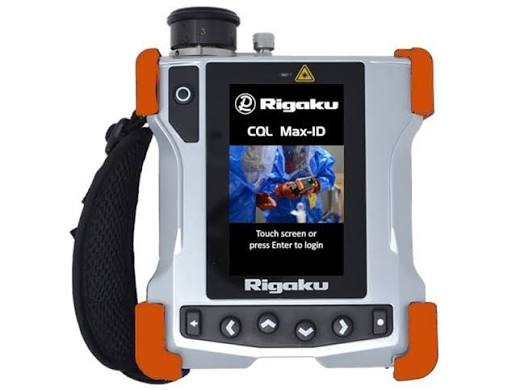
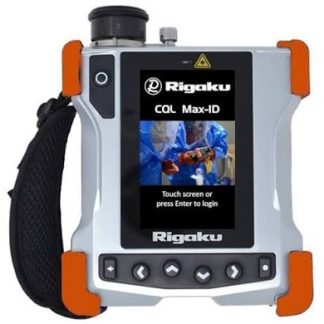
Rigaku CQL Max-ID Raman Analyzer Repair
The CQL Max-ID is the broadest-coverage member of Rigaku’s ResQ CQL family of 1064 nm handheld Raman analyzers, carrying an onboard library of over 13,000 items covering narcotics, explosives, toxic industrial chemicals and chemical warfare agents, and scanning through wrappings and containers so the operator is never exposed. Analysis typically runs under a minute. Because it is bought specifically for breadth of identification, a degraded instrument costs exactly the capability it was chosen for: the marginal, weakly scattering materials stop being called first.
June Company’s certified technicians repair the ResQ CQL Max-ID for hazmat teams, bomb squads, military CBRNE units, and emergency response agencies. We diagnose and repair at the board and component level, and every instrument is functionally tested against a known reference sample before it ships back.
Common ResQ CQL Max-ID problems we fix
- Laser output degradation — excitation power falling until spectra get noisy and library match confidence drops.
- Detector degradation — rising noise floor and falling sensitivity, most visible on weak bands and trace components.
- Optical alignment drift — throughput falling away after a drop or a shock, with peak positions no longer landing where the library expects.
- Sapphire window and nose-cone damage — scratching or clouding at the sample interface, which costs signal before it fails outright.
- Battery, charging and power faults — shortened runtime, or shutdowns partway through a shift.
- Display and touchscreen failures — dim, dead or unresponsive panels, including digitizer faults that make the interface unusable in the field.
- Trigger, keypad and interlock failures — the controls and safety interlocks that stop the instrument firing when they fail.
- USB, Wi-Fi and Bluetooth communication faults — results not transferring to the host software, or the instrument not being recognized at all.
- Housing, seal and ruggedization damage — cracked enclosures and failed gaskets after a drop, which let dust and moisture inside the instrument.
- Library and match-confidence faults — materials the instrument used to call cleanly now returning low confidence.
FAQs
It identifies common substances but fails on unusual ones. Is that the library? Rarely. That pattern is the signature of falling signal-to-noise, which affects weakly scattering materials first. It is a hardware question.
Does repair change the substance library? No. We restore hardware; the library and its version are left as they are unless you ask otherwise.
Do you handle the Gen-ID and Narc-ID as well? Yes, the whole ResQ CQL family comes through the same bench.
Every repair is backed by a 90-day parts-and-labor warranty, with a firm quote before any work begins. Email us or submit a service request.

Reviews
There are no reviews yet.