

Description
Bruker MOBILE-IR II FT-IR Spectrometer Repair
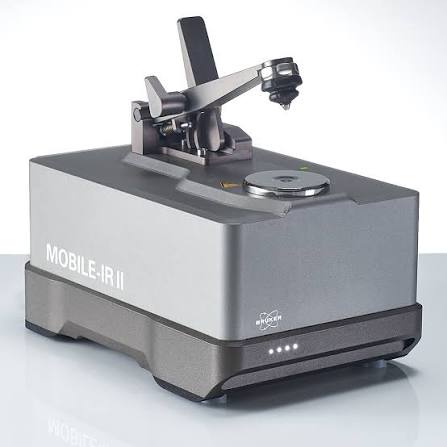
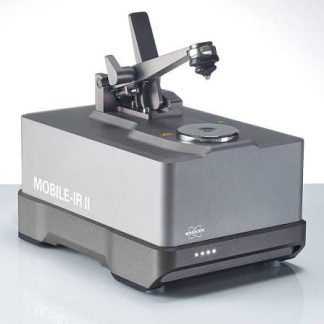
The MOBILE-IR II is Bruker’s portable FT-IR, built to deliver benchtop-grade performance on battery power in the field. It uses a cryogen-free TE-cooled MCT detector, so there is no liquid nitrogen to manage, with a heatable diamond ATR crystal, an IP65-rated body on vibration-damping feet, and an IP67 carry case for site work. The integrated battery reports charge at 100/75/50/25 percent and an intelligent standby mode stretches runtime. That combination is what makes it useful and what makes it demanding to keep running: a precision optical bench that has to survive transport, temperature swings and humidity a laboratory instrument would never meet, with a battery system on top.
June Company’s certified technicians repair the MOBILE-IR II for field analytical teams, art and conservation scientists, pharmaceutical inspectors, and mobile QC laboratories. We diagnose and repair at the board and component level, and every instrument is functionally verified against known reference standards before it ships back.
Common MOBILE-IR II problems we fix
- Interferometer alignment and drive faults — loss of throughput or distorted interferograms, often following transport rather than use.
- Seal and desiccant failures — moisture reaching the optical bench, which shows up as water vapor bands across the spectrum.
- Infrared source ageing or failure — falling energy across the spectrum, showing first as longer averaging for the same noise level.
- Detector degradation — rising noise floor and falling sensitivity, most visible on weak bands and trace components.
- Battery, charging and power faults — shortened runtime, or shutdowns partway through a shift.
- Display and touchscreen failures — dim, dead or unresponsive panels, including digitizer faults that make the interface unusable in the field.
- USB, Wi-Fi and Bluetooth communication faults — results not transferring to the host software, or the instrument not being recognized at all.
- Housing, seal and ruggedization damage — cracked enclosures and failed gaskets after a drop, which let dust and moisture inside the instrument.
- Failed startup self-check or calibration verification — the instrument no longer verifying correctly against its internal reference.
- ATR and sampling interface faults — damage or contamination at the point the sample meets the instrument.
FAQs
It performs well in the lab but poorly on site. Is that a real fault? Very often, yes. Marginal seals and marginal alignment both pass in stable conditions and fail in the field. We test across conditions rather than only at the bench.
How much transport damage is repairable? More than people expect. Alignment and mounting damage are routine work; we will tell you quickly if something is genuinely beyond economic repair.
Does it come back calibrated? It comes back verified against reference standards, with the results documented.
Every repair is backed by a 90-day parts-and-labor warranty, with a firm quote before any work begins. Email us or submit a service request.



Reviews
There are no reviews yet.