

Description
Bruker ALPHA II FT-IR Spectrometer Repair
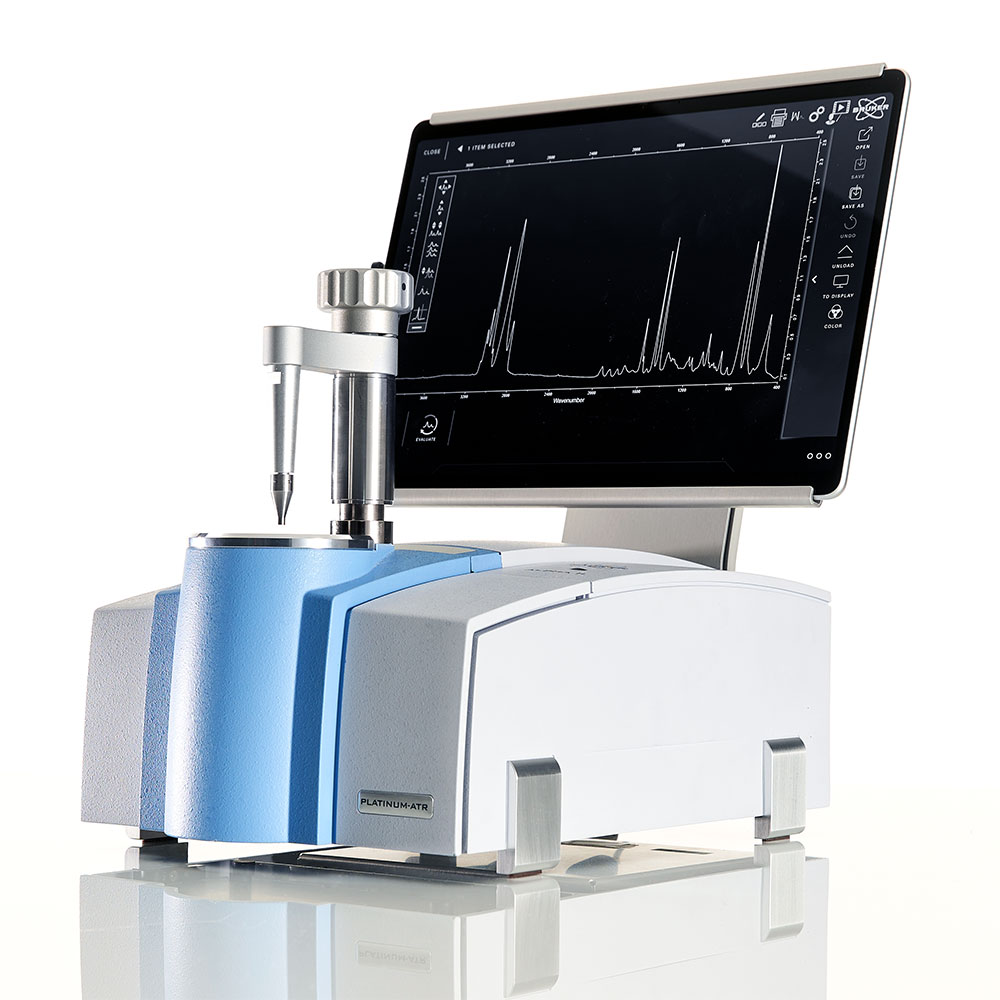
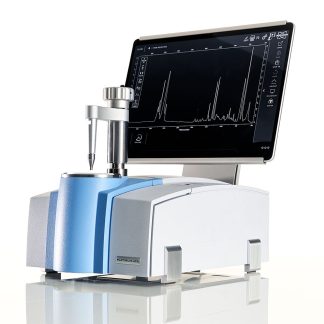
The ALPHA II is Bruker’s compact FT-IR spectrometer, roughly a laptop footprint at 22 by 30 cm and about 7 kg, covering 350 to 8,000 cm-1 with standard KBr optics at better than 2 cm-1 resolution and a signal-to-noise ratio around 55,000:1 at 4 cm-1 in one minute. Its RockSolid interferometer uses dual gold-coated cube-corner retroreflectors in an inverted double-pendulum arrangement on a wear-free flexible pivot at the center of mass, which is what makes it tolerant of vibration and permanently aligned. Pair that with a CenterGlow source, a temperature-controlled DTGS detector and user-swappable QuickSnap sampling modules, and the failure modes are the classic FT-IR ones: source aging, detector performance, moisture at the bench, and modules that stop seating cleanly.
June Company’s certified technicians repair the ALPHA II for QC laboratories, pharmaceutical manufacturers, polymer and coatings labs, and academic research groups. We diagnose and repair at the board and component level, and every instrument is functionally verified against known reference standards before it ships back.
Common ALPHA II problems we fix
- Interferometer alignment and drive faults — loss of throughput, distorted interferograms, or the mirror drive no longer scanning smoothly.
- Infrared source ageing or failure — falling energy across the spectrum, showing first as longer averaging for the same noise level.
- Detector degradation — rising noise floor and falling sensitivity, most visible on weak bands and trace components.
- Seal and desiccant failures — moisture reaching the optical bench, which shows up as water vapor bands across the spectrum.
- QuickSnap sampling module faults — modules not seating, not being recognized, or performing inconsistently between swaps.
- ATR crystal damage and contamination — scratching or residue at the sampling interface that degrades every spectrum taken through it.
- USB, Wi-Fi and Bluetooth communication faults — results not transferring to the host software, or the instrument not being recognized at all.
- Failed startup self-check or calibration verification — the instrument no longer verifying correctly against its internal reference.
- Power supply and control board faults — intermittent startup or shutdowns partway through a measurement run.
FAQs
Our signal-to-noise has slowly degraded. Source or detector? Both age and both look similar from the spectrum alone. We measure source energy and detector response independently rather than replacing the source on principle.
Is interferometer alignment something you can do, or does it go back to Bruker? We align interferometers on the bench. Where a fault genuinely needs the manufacturer, we tell you rather than taking the instrument apart first.
Can you test our specific QuickSnap modules with the instrument? Yes, and it is worth sending them. Module faults and instrument faults are frequently confused, and having both lets us prove which it is.
Every repair is backed by a 90-day parts-and-labor warranty, with a firm quote before any work begins. Email us or submit a service request.


Reviews
There are no reviews yet.