Description
BEI Encoder Repair
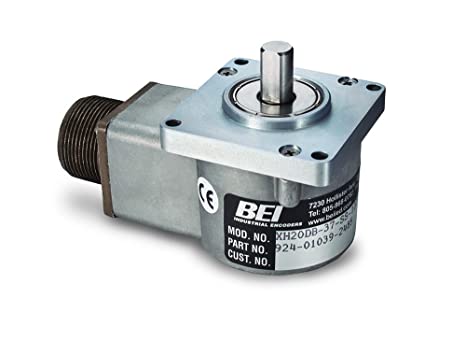
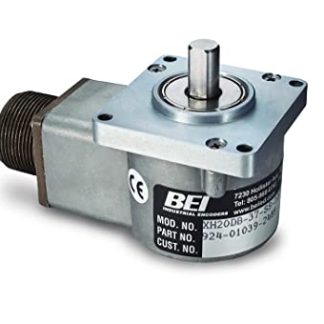
The BEI Encoder is a servo motion component – a motor, encoder or resolver whose job is to report or produce precise position. Feedback integrity is everything: a drive can only be as accurate as the position signal it is given.
June Company’s certified technicians repair the BEI Encoder for machine builders, automation engineers, industrial maintenance teams, and motion control specialists. Every instrument is repaired at component level and verified against reference standards before it ships back, with the measured results documented.
Common BEI Encoder problems we fix
- Connector and cable faults – motion cables flex constantly and fail more often than the components they connect.
- Brake not releasing or holding.
- Overheating under load.
- Feedback signal lost, noisy, or incorrect – encoder or resolver faults, which present to the drive as a position error rather than as a failed component.
- Winding faults or insulation breakdown.
- Bearing wear or mechanical damage.
- Encoder disc, code wheel or optics damage.
FAQs
Do you service instruments past manufacturer support? Yes. Much of what we repair is out of support, which is exactly where component-level work earns its keep.
What if it is not economical to repair? We tell you in the quote. The evaluation is free and there is no obligation to proceed.
Every repair carries a 90-day parts-and-labor warranty, with a firm quote before any work begins. Email us or submit a service request.
Brand
BEI Repair
BEI Sensors specializes in manufacturing precision sensor products designed for motion control and position sensing in industrial and harsh environment applications. Their product range includes rotary encoders, linear encoders, potentiometers, and more. Here is an overview of BEI Sensors' key products and their functionalities:
1. Rotary Encoders
Incremental Encoders: Provide output signals for each incremental step of rotation, used for speed and position feedback in motors and machinery.
Absolute Encoders: Provide unique position values for each shaft position, ensuring accurate position tracking even after power loss. Available in both single-turn and multi-turn versions.
Optical and Magnetic Encoders: Optical encoders use light to detect position changes, offering high precision, while magnetic encoders use magnetic fields, providing robustness in harsh environments.
2. Linear Encoders
Incremental Linear Encoders: Measure linear displacement by producing a series of pulses corresponding to the linear movement.
Absolute Linear Encoders: Provide absolute position feedback along a linear path, ensuring continuous position tracking.
3. Potentiometers
Rotary Potentiometers: Measure rotational position by varying resistance as the shaft turns. Used in a variety of applications for angle measurement and control.
Linear Potentiometers: Measure linear position or displacement through a variable resistance mechanism.

Shipping & Returns
Packing your equipment. You are responsible for packaging equipment adequately for transit. We strongly recommend the original manufacturer’s case, or double-boxing with at least two inches of shock-absorbing material on all six sides. We return your equipment in the packaging it arrived in, so please send it in packaging that will survive the return trip as well. If your packaging is damaged or inadequate for the return, we will substitute suitable packaging and may charge the cost of materials.
Insurance. Equipment is not insured by June Company while in transit. We strongly recommend insuring your shipment for its full replacement value.
Risk of loss. Risk of loss remains with you until your equipment is received at our facility, and transfers back to you when your repaired unit is delivered to the carrier (F.O.B. shipping point). June Company is not responsible for equipment lost, delayed, misdelivered, or damaged in transit, in either direction.
Return label. A prepaid and preprinted return shipping label should be included with your shipment. If one is not included, we will provide one.
Transit damage. Damage occurring in transit is the responsibility of the carrier. It is not a warranty defect and is not covered by the 90-day repair warranty. Any claim must be filed by you with the carrier; we will supply photographs and documentation to support it at no charge.
Full details: Terms & Conditions, Section 6 · Return Policy
Only logged in customers who have purchased this product may leave a review.



Reviews
There are no reviews yet.