

Description
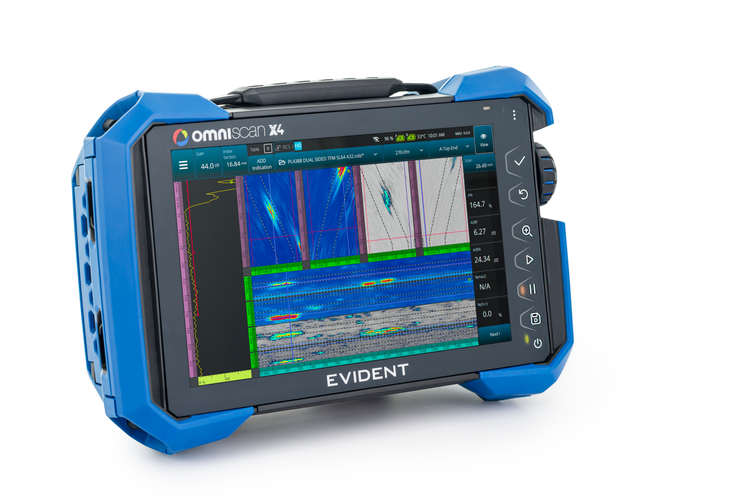
Evident OmniScan X4 Flaw Detector Repair
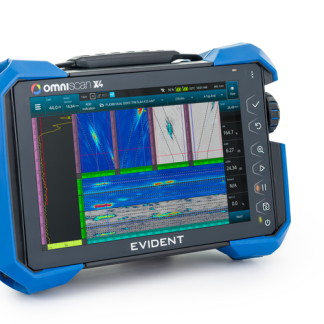
The OmniScan X4 is the phased array flaw detector at the top of the OmniScan line, offered in 16:64PR, 16:128PR, 32:128PR and 64:128PR configurations, with a 64-element TFM aperture and a 128-element extended aperture on the 64:128PR. It acquires up to eight TOFD and phased array groups at once, displays up to four TFM and PCI groups, computes TFM up to three times faster than the previous generation, and renders TFM images up to 1024 by 1024 points, with total focusing method, phase coherence imaging and plane wave imaging on every model. It is a field instrument doing laboratory-grade work, and the parts that fail reflect that duty: connectors cycled thousands of times, encoders dragged along welds, and batteries run flat daily.
June Company’s certified technicians repair the OmniScan X4 for NDT service companies, in-service inspection teams, pipeline and weld inspectors, and aerospace maintenance shops. We diagnose and repair at the board and component level, and every instrument is functionally verified against calibrated reference blocks before it ships back.
Common OmniScan X4 problems we fix
- Probe, connector and cable faults — intermittent or dead channels that trace back to worn connectors rather than the probe itself.
- Encoder and positioning faults — scan position drifting or not registering, so indications land in the wrong place on the scan.
- Dead or noisy phased array elements — individual channels dropping out, which shows as gaps or artifacts in the sectorial scan.
- Acquisition board and pulser-receiver faults — gain, noise or timing problems that affect every channel rather than one.
- Display and touchscreen failures — dim, dead or unresponsive panels, including digitizer faults that make the interface unusable in the field.
- Battery, charging and power faults — shortened runtime, or shutdowns partway through a shift.
- USB, Wi-Fi and Bluetooth communication faults — results not transferring to the host software, or the instrument not being recognized at all.
- Housing, seal and ruggedization damage — cracked enclosures and failed gaskets after a drop, which let dust and moisture inside the instrument.
- Data storage and export faults — scans not saving, or files not opening correctly in the analysis software.
- Calibration and wedge-delay faults — the instrument failing to calibrate reliably against reference blocks.
FAQs
One element is dead. Is that the probe or the instrument? That is the most common diagnostic question on phased array and it is answerable on the bench. We test the instrument against a known-good probe so you are not replacing an expensive probe that was never faulty.
The encoder reads intermittently. Cable or encoder? Usually the cable or connector rather than the encoder itself, and that is a much cheaper repair. We check in that order.
Do you calibrate against reference blocks before return? Yes. Every instrument is verified against calibrated reference blocks and the results are documented.
Every repair is backed by a 90-day parts-and-labor warranty, with a firm quote before any work begins. Email us or submit a service request.



Reviews
There are no reviews yet.