

Description
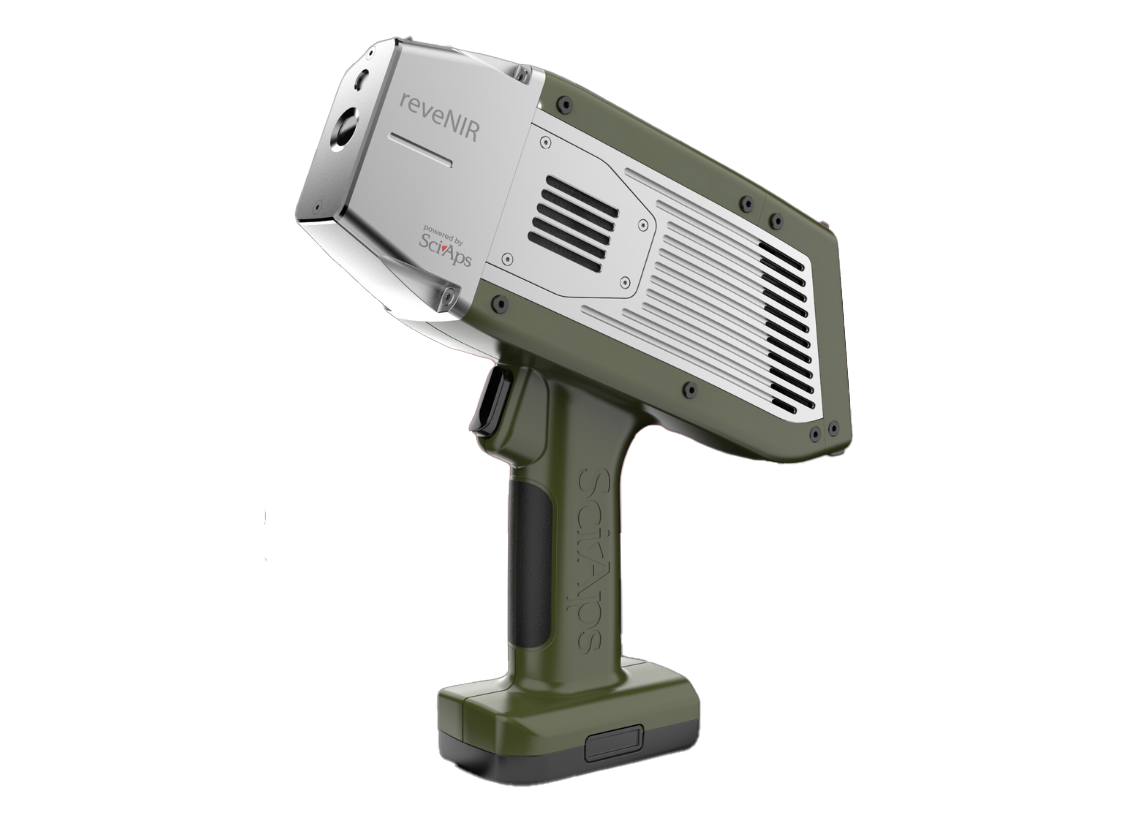
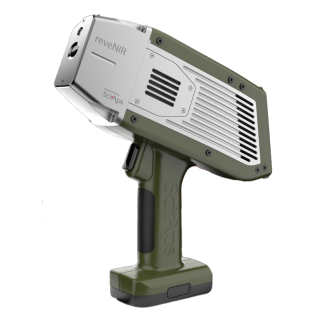
SciAps reveNIR Analyzer Repair
The reveNIR is SciAps’ handheld Vis-NIR analyzer for mineral identification, covering 350 to 2,510 nm through multiple internal detectors and shipping with a library of around 250 exploration minerals. It reads reflectance spectra to predict mineral composition in the field or at the core shed, identifying clays, alteration minerals and other pathfinders that indicate proximity to ore, and it does it in a package under 4.5 lb with the battery, around 2 lb lighter and half the size of the ASD Halo it competes with. Like the rest of the SciAps platform it runs on Android control hardware, which is worth knowing for repair: a fault that presents as analytical is sometimes the control side, and a fault that looks like software is sometimes the optics.
June Company’s certified technicians repair the reveNIR for exploration geologists, mining companies, core logging teams, and minerals laboratories. We diagnose and repair at the board and component level, and every instrument is functionally tested against a known reference sample before it ships back.
Common reveNIR problems we fix
- Detector degradation — rising noise floor and falling sensitivity, most visible on weak bands and trace components.
- Optical alignment drift — throughput falling away after a drop or a shock, with peak positions no longer landing where the library expects.
- Sapphire window and nose-cone damage — scratching or clouding at the sample interface, which costs signal before it fails outright.
- Battery, charging and power faults — shortened runtime, or shutdowns partway through a shift.
- Display and touchscreen failures — dim, dead or unresponsive panels, including digitizer faults that make the interface unusable in the field.
- USB, Wi-Fi and Bluetooth communication faults — results not transferring to the host software, or the instrument not being recognized at all.
- Housing, seal and ruggedization damage — cracked enclosures and failed gaskets after a drop, which let dust and moisture inside the instrument.
- Failed startup self-check or calibration verification — the instrument no longer verifying correctly against its internal reference.
- NIR source ageing or failure — falling illumination energy, showing first as predictions drifting rather than as an error.
- Android control hardware faults — the control platform failing in ways that look analytical from the operator’s side.
FAQs
Our predictions have drifted. Instrument or calibration model? Worth establishing before rebuilding a model. We verify the instrument against reference samples, which tells you which side the drift is actually on.
The interface locks up but measurements seem fine. What is that? That normally points at the Android control hardware rather than the optics, and it is repairable at that level.
Do you repair the rest of the SciAps range? Yes — the X-Series XRF and Z-Series LIBS analyzers come through the same bench.
Every repair is backed by a 90-day parts-and-labor warranty, with a firm quote before any work begins. Email us or submit a service request.

Reviews
There are no reviews yet.