

Description
Thermo Scientific Defender Omega Analyzer Repair
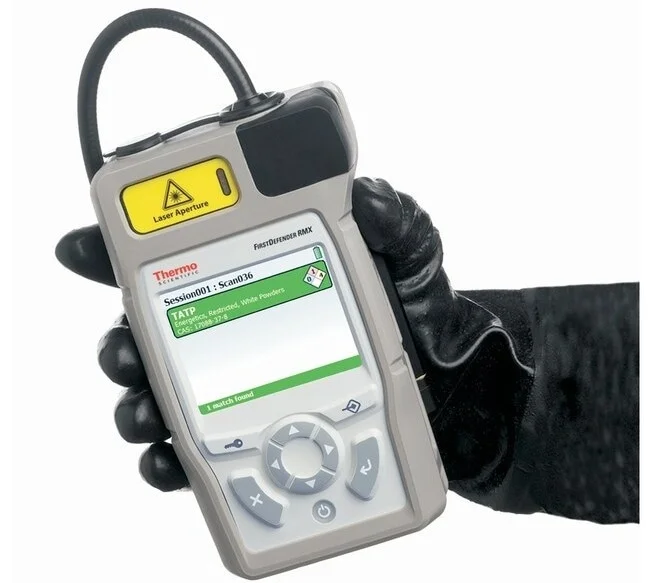
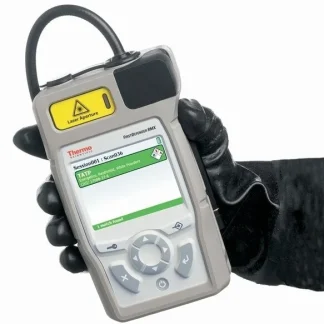
The Defender Omega is a handheld Raman analyzer built around 1064 nm excitation rather than the more common 785 nm, in a touchless point-and-shoot form rated IP68 and MIL-STD-810H. The longer wavelength is the whole point of the instrument: it suppresses the fluorescence that swamps Raman spectra on colored packaging and dirty organic samples, which is exactly the material responders meet. It carries ID and Screener scan modes, expandable libraries, and recordkeeping built in through GPS, camera, user IDs and scan logs. That combination sets the repair profile, because the 1064 nm laser and its matched detector define whether the instrument still works, while the recordkeeping hardware defines whether the results are usable afterward.
June Company’s certified technicians repair the Defender Omega for hazmat teams, military CBRNE units, customs and border officers, and industrial safety teams. We diagnose and repair at the board and component level, and every instrument is functionally tested against a known reference sample before it ships back.
Common Defender Omega problems we fix
- Laser output degradation — excitation power falling until spectra get noisy and library match confidence drops.
- Detector degradation — rising noise floor and falling sensitivity, most visible on weak bands and trace components.
- Optical alignment drift — throughput falling away after a drop or a shock, with peak positions no longer landing where the library expects.
- Sapphire window and nose-cone damage — scratching or clouding at the sample interface, which costs signal before it fails outright.
- Battery, charging and power faults — shortened runtime, or shutdowns partway through a shift.
- Display and touchscreen failures — dim, dead or unresponsive panels, including digitizer faults that make the interface unusable in the field.
- USB, Wi-Fi and Bluetooth communication faults — results not transferring to the host software, or the instrument not being recognized at all.
- Failed startup self-check or calibration verification — the instrument no longer verifying correctly against its internal reference.
- Housing, seal and ruggedization damage — cracked enclosures and failed gaskets after a drop, which let dust and moisture inside the instrument.
- Fluorescence rejection falling away — the advantage of 1064 nm excitation disappearing as laser or detector performance drifts.
FAQs
Match confidence has dropped across the board. Laser or detector? It can be either, and they present almost identically. We measure excitation power and detector response separately rather than replacing the expensive part first.
Is a 1064 nm laser repairable, or is it always a replacement? It depends on the failure. Drive and thermal control faults are frequently repairable; a failed emitter is not, and we tell you which one you have before any work starts.
Can you still service it if it is out of manufacturer support? Yes. Out-of-warranty and end-of-support instruments are a large part of what comes through the bench.
Every repair is backed by a 90-day parts-and-labor warranty, with a firm quote before any work begins. Email us or submit a service request.

Reviews
There are no reviews yet.