
Description
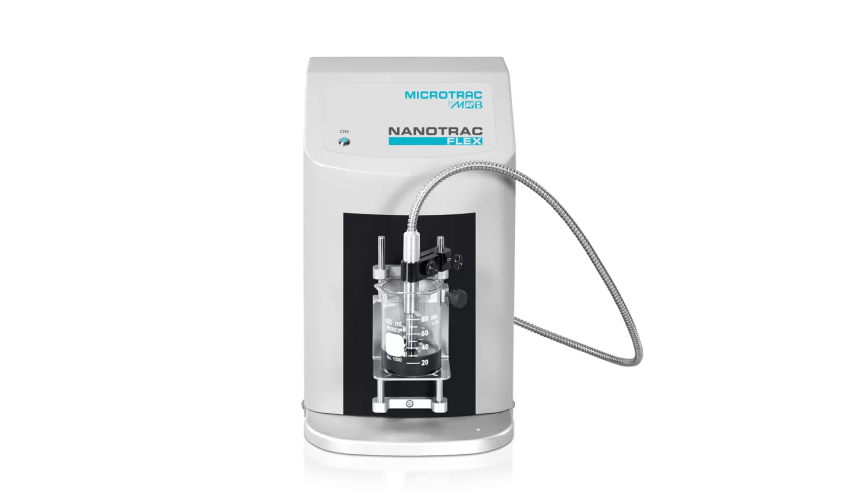
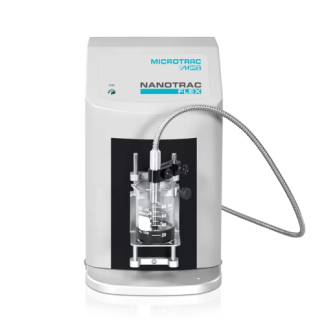
Microtrac NANOTRAC FLEX Nanoparticle Size Analyzer Repair
June Company repairs the Microtrac NANOTRAC FLEX at the component level — the laser, the detector and its optics, the Peltier temperature stage, the sample cell assembly and the correlator electronics — rather than swapping modules until something works. Send us the instrument and you get a firm quote before anything is touched, a 90-day parts-and-labor warranty on the work, and NIST-traceable calibration included with most repairs. The evaluation fee is credited to the repair, and most instruments are back out the door in one to three business days.
Knowing the instrument is the difference between a repair and a parts swap. The NANOTRAC FLEX measures by dynamic light scattering through a probe rather than a sealed cuvette chamber, which is what lets it size a sample in situ instead of requiring a decanted aliquot. That design moves the fragile part to the end of a fibre, where it gets handled, immersed and cleaned repeatedly. The result is a repair profile weighted toward the probe and its optical coupling rather than the bench: contamination and fibre damage cost signal quietly, and because the instrument still returns a result, the first symptom is usually data that looks noisy rather than an obvious failure.
What is included with every NANOTRAC FLEX repair
- Component-level diagnosis and repair — board and component work by certified technicians, not module replacement.
- A firm quote before any work begins — including which subsystem failed and why, so the decision is yours.
- 90-day parts-and-labor warranty on everything we repair.
- NIST-traceable calibration included with most repairs.
- Functional testing against a certified particle size standard before the instrument ships back.
- Evaluation fee credited to the repair — it is not an extra charge on top.
- No forms and no account needed — send it in and we take it from there.
- Out-of-warranty and end-of-support instruments welcome — a large share of what comes through the bench.
Common NANOTRAC FLEX problems we fix
- Probe and fibre-optic faults — damage or contamination at the probe tip, which costs signal while the instrument still reports normally.
- Peltier temperature control faults — the stage drifting off setpoint, which biases every result because size is derived through viscosity and viscosity follows temperature.
- Detector degradation — rising dark counts and falling sensitivity, worst on dilute or weakly scattering samples.
- Optical alignment drift — scattering volume no longer landing on the detector properly, costing count rate before anything fails.
- Cuvette holder and cell contamination — residue and scratching in the sample path, which reads as spurious large particles.
- Correlator and acquisition electronics faults — noisy or truncated correlation functions that will not fit cleanly.
- Communication and software faults — the instrument not being recognised by the host PC, or results not writing to the report.
FAQs
What does the evaluation involve, and what does it cost me? We bench-test the instrument, identify the failed subsystem and send you a firm price. The evaluation fee is credited to the repair if you go ahead, so the repair costs what the quote says and nothing more.
Results have gone noisy but the instrument reports no fault. Where do we look? The probe, in most cases. Fibre damage and tip contamination cost signal without producing an error, and both are repairable at a fraction of what people expect.
Can the probe be serviced separately from the instrument? Yes, and that is usually the economical route. We assess the probe, its fibre and the coupling independently of the optical bench.
Every repair is backed by a 90-day parts-and-labor warranty, with a firm quote before any work begins. Email us or submit a service request.



Reviews
There are no reviews yet.