
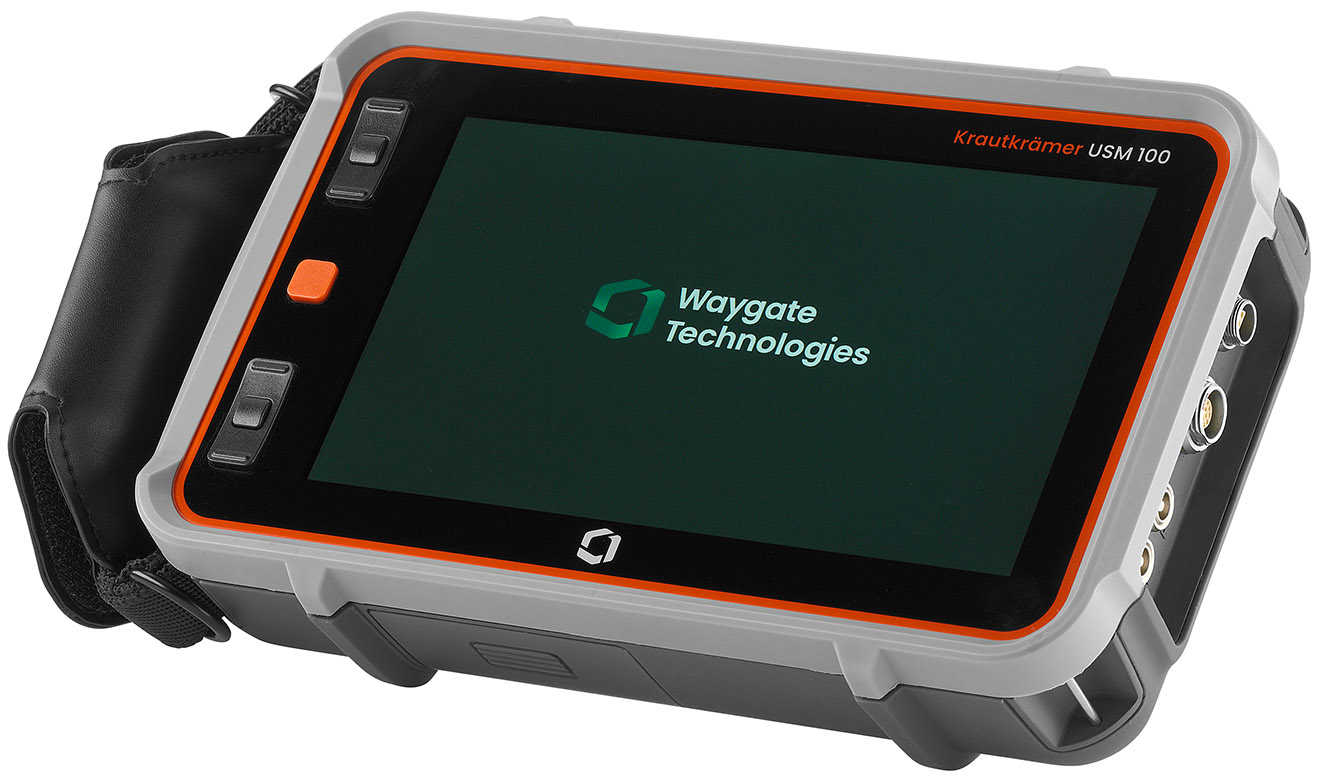
Description
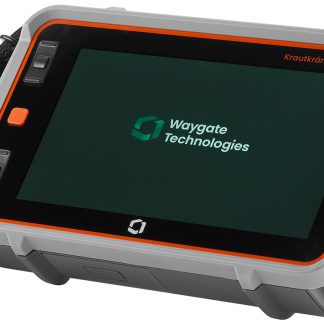
Krautkramer USM 100 Ultrasonic Flaw Detector Repair
June Company repairs the Krautkramer USM 100 at the component level — the pulser and receiver, the probe connectors, the display, the battery system and the control electronics — rather than swapping modules until something works. Send us the instrument and you get a firm quote before anything is touched, a 90-day parts-and-labor warranty on the work, and NIST-traceable calibration included with most repairs. The evaluation fee is credited to the repair, and most instruments are back out the door in one to three business days.
Knowing the instrument is the difference between a repair and a parts swap. Conventional ultrasonic flaw detectors rarely arrive dead. They arrive out of specification, which is a different and more dangerous problem: the instrument works, the screen looks normal, and the vertical or horizontal linearity has drifted far enough that it will not pass a calibration check — or worse, passes yours but reports a wall thinner or thicker than it is. The pulser and receiver age, connectors wear, and both cost amplitude quietly. The USM 100 is the advanced instrument in the line, and the more measurement modes an instrument offers the more surfaces there are for that drift to show up on.
What is included with every USM 100 repair
- Component-level diagnosis and repair — board and component work by certified technicians, not module replacement.
- A firm quote before any work begins — including which subsystem failed and why, so the decision is yours.
- 90-day parts-and-labor warranty on everything we repair.
- NIST-traceable calibration included with most repairs.
- Functional testing against a calibration block before the instrument ships back.
- Evaluation fee credited to the repair — it is not an extra charge on top.
- No forms and no account needed — send it in and we take it from there.
- Out-of-warranty and end-of-support instruments welcome — a large share of what comes through the bench.
Common USM 100 problems we fix
- Pulser and receiver degradation — falling output and rising noise, which costs penetration on thick or attenuative material first.
- Probe connector wear — loose or eroded connectors costing signal amplitude, which reads as a thinner wall or a missed indication.
- Vertical and horizontal linearity drift — amplitude and timebase falling out of specification, so the instrument no longer passes a calibration check.
- Display and touchscreen failures — dim, dead or unresponsive panels, including digitizer faults.
- Battery, charging and power faults — shortened runtime, or shutdowns partway through an inspection.
- Housing, seal and ruggedisation damage — cracked enclosures and failed gaskets after a drop.
- Data transfer and software faults — results not exporting, or the instrument not being recognised by the host PC.
FAQs
What does the evaluation involve, and what does it cost me? We bench-test the instrument, identify the failed subsystem and send you a firm price. The evaluation fee is credited to the repair if you go ahead, so the repair costs what the quote says and nothing more.
It still works but will not pass our calibration check. Is that repairable? Usually, and it is the most common reason these come in. Vertical and horizontal linearity drift as the pulser-receiver ages, and bringing them back into specification is bench work rather than replacement.
How do we know it is right when it comes back? We verify against a calibration block and include NIST-traceable calibration with most repairs, so it returns ready to pass your own check rather than needing one.
Every repair is backed by a 90-day parts-and-labor warranty, with a firm quote before any work begins. Email us or submit a service request.



Reviews
There are no reviews yet.