
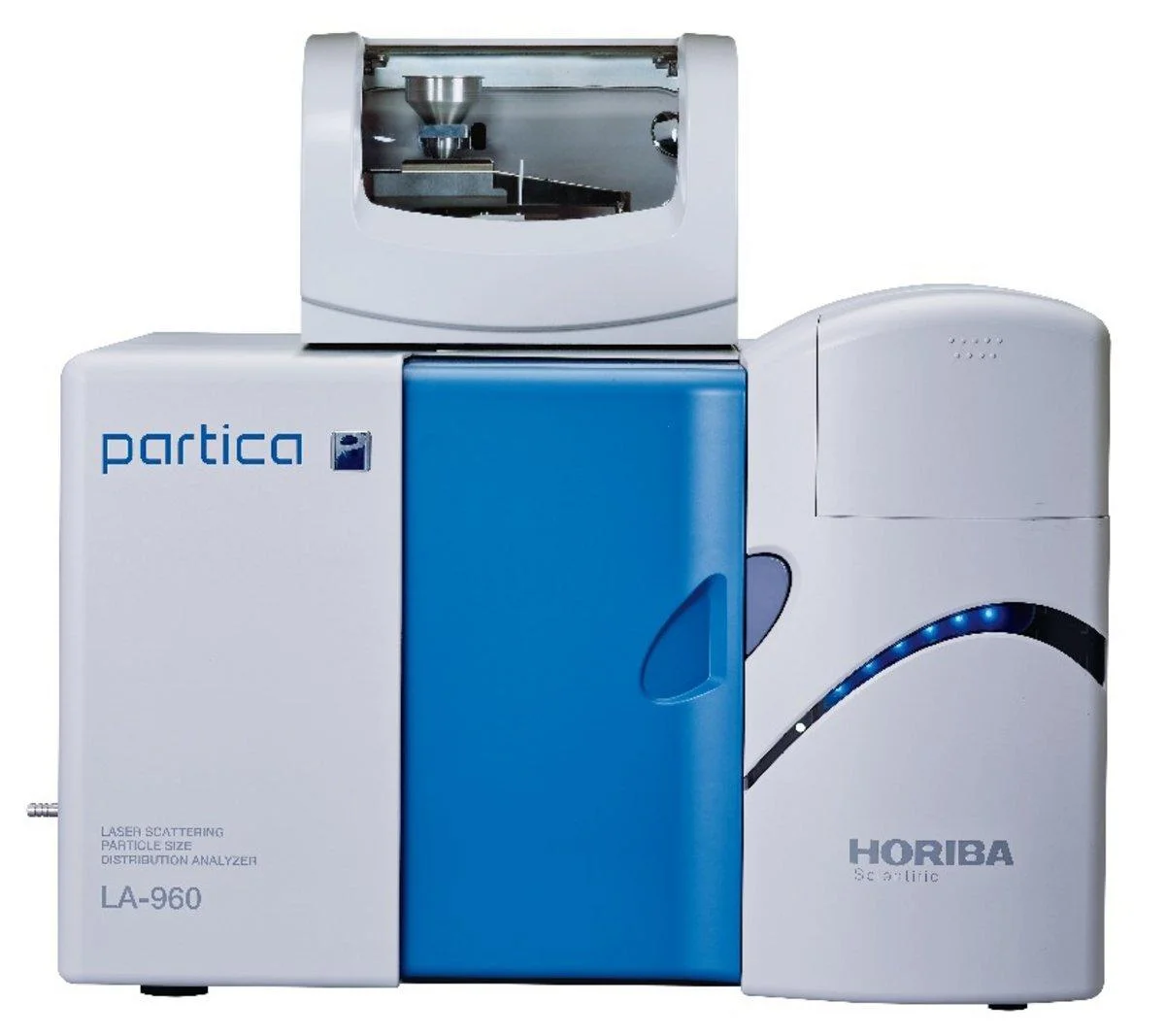
Description
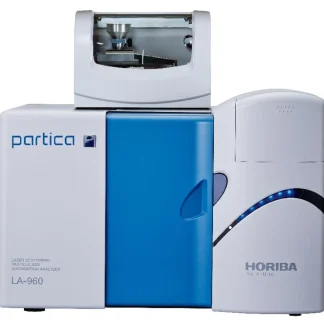
HORIBA LA-960V2 Laser Diffraction Particle Size Analyzer Repair
June Company repairs the HORIBA LA-960V2 at the component level — the dual light sources, the detector arrays, the optical bench, the wet and dry dispersion units and the control electronics — rather than swapping modules until something works. Send us the instrument and you get a firm quote before anything is touched, a 90-day parts-and-labor warranty on the work, and NIST-traceable calibration included with most repairs. The evaluation fee is credited to the repair, and most instruments are back out the door in one to three business days.
Knowing the instrument is the difference between a repair and a parts swap. The LA-960V2 covers an unusually wide size range from one bench by using two light sources rather than one, and the detector geometry that makes that possible is also what makes it sensitive to disturbance. A laser diffraction result is not a measurement so much as an inversion — the instrument measures a scattering pattern and computes a distribution from it — which means a handful of dead elements in the ring array or a small alignment shift does not produce an error. It produces a plausible distribution that happens to be wrong. We check element response across the array and verify against a certified standard, because that is the only way this class of fault surfaces.
What is included with every LA-960V2 repair
- Component-level diagnosis and repair — board and component work by certified technicians, not module replacement.
- A firm quote before any work begins — including which subsystem failed and why, so the decision is yours.
- 90-day parts-and-labor warranty on everything we repair.
- NIST-traceable calibration included with most repairs.
- Functional testing against a certified particle size standard before the instrument ships back.
- Evaluation fee credited to the repair — it is not an extra charge on top.
- No forms and no account needed — send it in and we take it from there.
- Out-of-warranty and end-of-support instruments welcome — a large share of what comes through the bench.
Common LA-960V2 problems we fix
- Dual light source imbalance — one source drifting relative to the other, which distorts the join between size ranges.
- Detector array element failures — dead or drifting elements in the ring array, which distorts the calculated distribution.
- Optical bench alignment drift — beam and detector geometry moving after transport, so the inversion returns a plausible but wrong distribution.
- Cell window fouling and scratching — deposits and damage in the sample path that read as fines which are not there.
- Dispersion unit faults — pump, stirrer and ultrasonic probe problems that leave agglomerates intact and size the agglomerate rather than the particle.
- Laser output degradation — falling source power, which raises noise on the weakest detector channels first.
- Communication and software faults — the instrument not being recognised by the host PC, or results not writing to the report.
FAQs
What does the evaluation involve, and what does it cost me? We bench-test the instrument, identify the failed subsystem and send you a firm price. The evaluation fee is credited to the repair if you go ahead, so the repair costs what the quote says and nothing more.
Our distributions look reasonable but do not match the reference material. Where do we start? That pattern points at the detector array or bench alignment rather than anything dramatic. Laser diffraction fails by returning plausible wrong answers, which is why we verify against a certified standard rather than a self-test.
Do you service the wet and dry dispersion units as well as the optics? Yes. Pump, stirrer and ultrasonic faults are common and often the real cause when results drift toward larger sizes — you end up sizing agglomerates.
Every repair is backed by a 90-day parts-and-labor warranty, with a firm quote before any work begins. Email us or submit a service request.

Reviews
There are no reviews yet.